The value of reported fraud increased by 18% compared to last year, when it amounted to PLN 675 million. Data has been sourced from the latest Polish Chamber of Insurance report on insurance fraud.
This is the sixteenth edition of Poland’s only comprehensive study presenting data on insurance fraud. The report covers cases of fraud related to loss adjustment that have been reported by insurance companies operating
on the Polish market in 2025. The analysis takes into account both actual and attempted fraud.
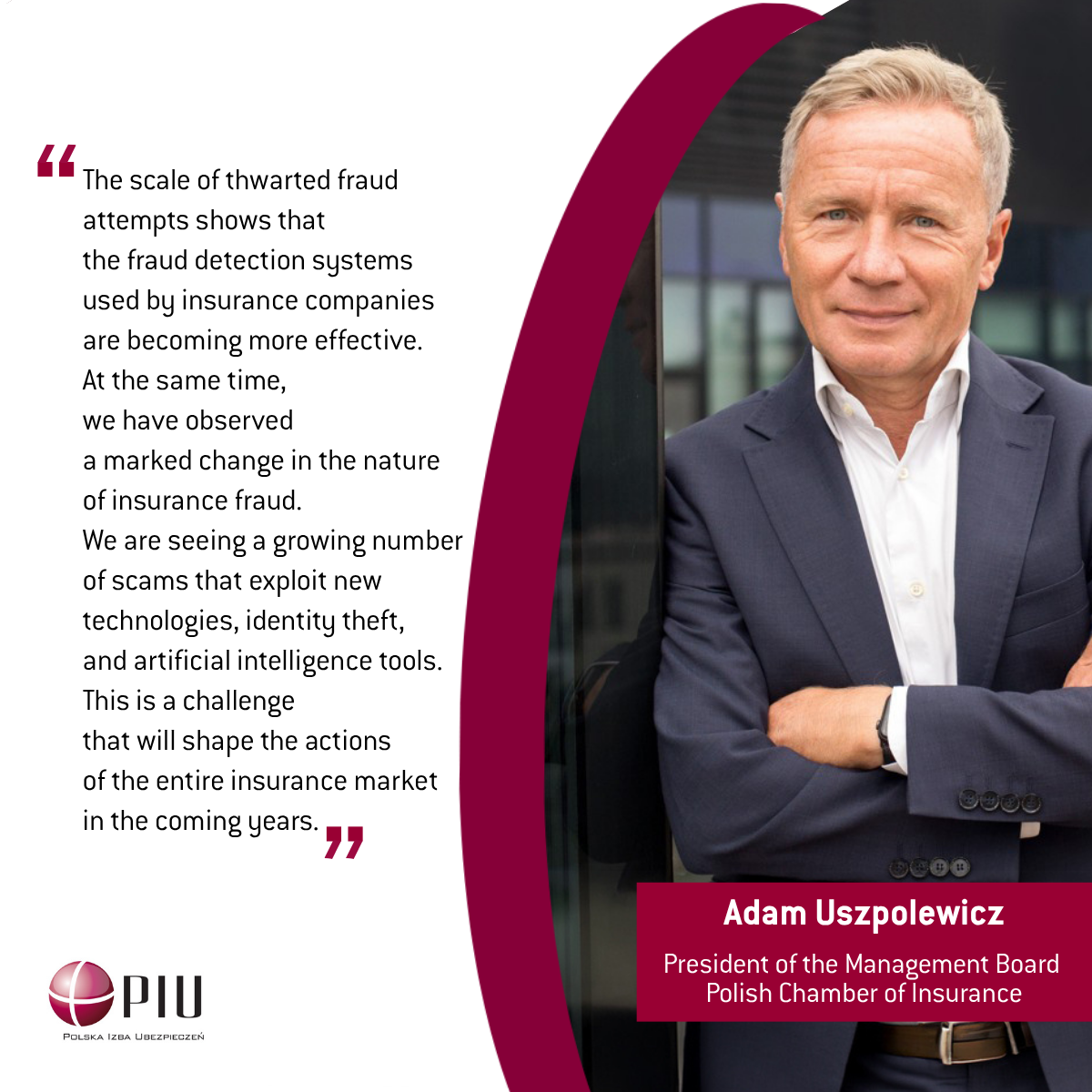
Fraud can happen even during the process of purchasing a policy
Although classic insurance fraud remains a significant issue, crimes committed as early as at the stage of entering into an insurance contract are becoming increasingly prevalent.
Criminals have begun to more frequently use stolen personal data, impersonate real people, or create so-called synthetic identities by combining real data with false information. These actions serve to fraudulently obtain commissions and insurance benefits, among other things.
The data used by criminals originates from data breaches, identity theft, or deliberately orchestrated scams.
As a result, cases of fraud that occur at the stage of purchasing a policy are becoming more complex and difficult to detect.
A new, digital phase of crime
The report published by the Polish Chamber of Insurance indicates that insurance fraud has entered a new, digital phase. The growth of remote sales channels, online comparison engines, instant messaging apps, social media, and modern payment methods means
that fraud is becoming easier to plan and carry out.
An additional challenge is the widespread availability of AI-based tools. Just a few years ago, preparing credible documentation or forged materials required specialized knowledge. Today, many such tools are available for free online, which significantly lowers the barrier to entry for potential perpetrators.
“Today, the Internet provides not only information but also ready-made action plans. The progressing development of AI tools means
that it is easier than ever before to forge documents or use someone else’s identity. That is why the technologies used by insurance companies to detect such attempts are being developed just as quickly,” said Piotr Raubo, Chairman of the Commission for Combating Insurance Crime and Director of the Anti-Fraud Bureau, TUiR Warta S.A.
Life insurance
The report shows that the value of detected fraud in life insurance increased by 31 percent in 2025 compared to
the previous year. This marks another year of a continuing upward trend that can be attributed in part to the increasingly effective detection of fraud through data analysis and the exchange of information among insurers. In 2025, life insurance companies paid out approximately PLN 17.5 billion in benefits, and the value of detected fraud accounted for 0.58 percent of that amount. More than half of the value of the uncovered fraud cases – approximately PLN 55 million – were related to the death of the insured. Fraud in this risk segment has been among the most serious crimes in the life insurance industry for years.
Property insurance
In property insurance, the value of detected fraud rose by 17 percent in 2025 compared to 2024. As has been the case, fraud related to auto insurance represents the largest group, accounting for approximately 64 percent of the total number
and value of all detected fraud in this segment. In 2025, insurance companies paid out more than PLN 36 billion in property insurance claims, and the value of detected cases of fraud accounted for 1.92 percent of that amount.
More than 900 cases of fraud related to agricultural insurance
The report also shows that agricultural insurance is one of the areas in property insurance where cases of fraud have been prevalent. In 2025, insurance companies reported more than 900 cases of fraud related to agricultural insurance, with their total value exceeding PLN 21 million. They primarily concerned damage to crops, livestock, and farm machinery. Large areas of farmland and extensive livestock operations provide perpetrators with the opportunity to stage costly damage, which makes this market segment particularly vulnerable to fraud attempts.
In addition, 272 cases of fraud were detected in the mandatory third-party liability insurance for farmers, the value of which exceeded
PLN 11 million.
Although the largest number of cases of fraud still involves property insurance, particularly auto insurance, the fastest growth in the value of detected fraud has been observed in the life insurance segment.